
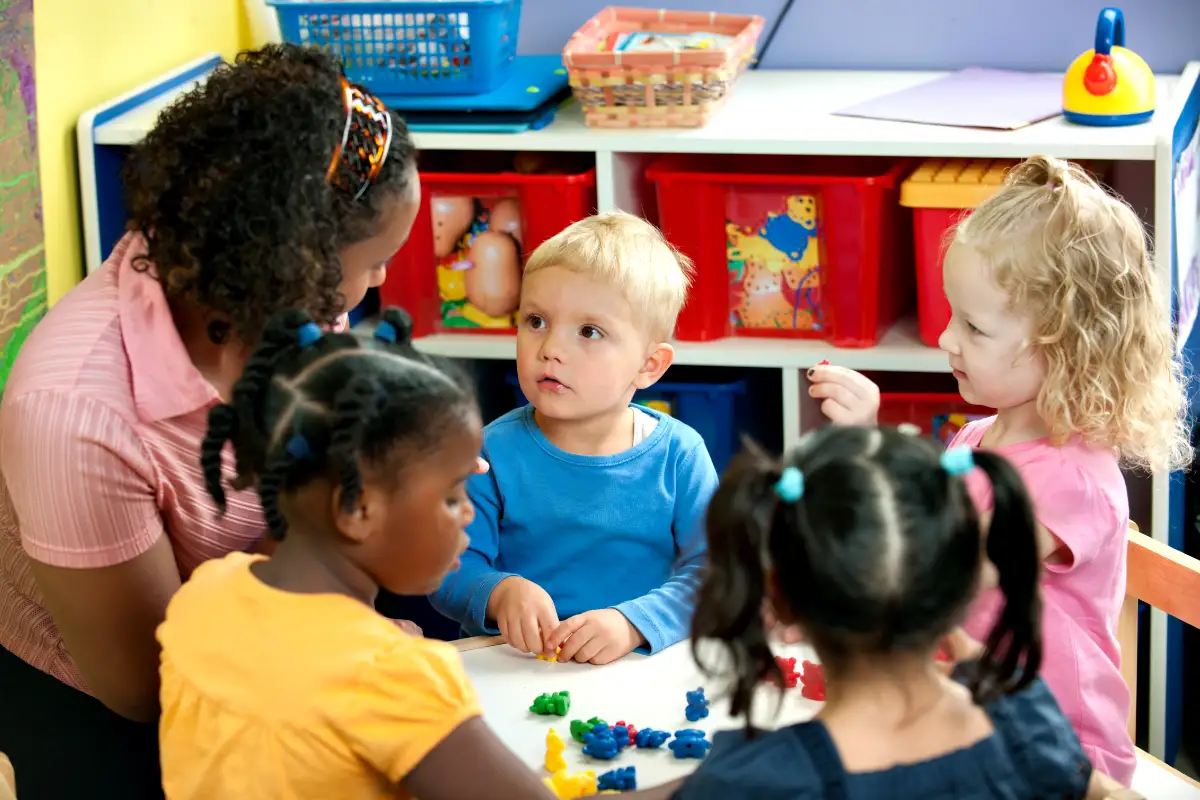
When you go on a private kindergarten tour in Fairfax, Virginia, the best questions are those which give you an idea of what a typical Tuesday will be like for your child. You should ask about the daily routine, who will get to know your child well, how the school deals with strong emotions, how faith is expressed in everyday situations, and also how you’ll be able to keep up to date with what’s going on while you’re at work.
You are already familiar with the tour script; there’s a friendly director, a bright hallway, and a classroom with name tags on the cubbies. Everything appears very nice and in most cases it does.
A tour, however, is only a brief and carefully presented glimpse. Your role should be to go beyond the surface polish without becoming like a prosecutor. The appropriate questions achieve this in a gentle way and also reveal something that the answers themselves cannot show, that is, how a school acts when a parent has a question. If a school is open to asking difficult questions, then it will tend to be open to parents as well.
This guide walks you through the questions worth bringing, why each one matters, and what a good answer sounds like. Print it, screenshot it, or jot your favorites on your phone before you go.
Before you go: two things worth knowing
First, the age rule. In Virginia, a child can start kindergarten if they turn five on or before September 30 of that school year. Fairfax County Public Schools notes that the cutoff comes from state law and it can’t make exceptions (FCPS). The state’s compulsory attendance law lets families meet that requirement through a public school, a private or church school, a qualified tutor, or home instruction (Virginia Department of Education). So if you’re touring private schools, you’re choosing among real, legal options. You’re not taking a detour.
Second, “ready” means more than knowing letters. Virginia screens every public kindergartner each fall in literacy, math, self-regulation, and social skills. In fall 2024, about 49% of kindergartners statewide started the year still building skills in at least one of those four areas (VKRP report to the General Assembly, October 2025). Part of that jump came from a tougher new reading screener, so don’t read it as a crisis. Read it as reassurance. If your child isn’t perfect on day one, they’re in very good company.
Here’s the detail that caught our attention. Over that same year, reading and math scores improved, but the share of kids below the mark in self-regulation rose from 16% to 19%, and in social skills from 17% to 22%. As the year gets harder, some children struggle more with waiting, sharing, and calming down. That’s why several of the questions below focus on feelings and behavior, not just phonics.
Questions about a normal day and how kids learn
“Can you walk me through a regular day, from drop-off to pickup?” This is the single most useful question you can ask. Listen for specifics. When do kids move their bodies? When do they eat? When is the quiet reading time, and how long is it? A vague answer like “we keep them busy” tells you the day hasn’t been thought through.
“How much of the day is on a screen?” Ask this everywhere, including at schools that use digital curriculum. There’s no single right number. What you want is a clear, honest answer and a reason behind it. A school that’s thought about screen time will tell you exactly when devices come out, for how long, and who’s sitting beside your child when they do.
“What happens when my child is ahead, or a little behind?” Kids in one kindergarten class can be a full year apart in development. Ask how teachers adjust. Do advanced readers get harder books? Does a child who’s slower with numbers get extra time without being labeled? The answer shows whether the school teaches children or teaches a pace.
Questions about teachers, class size, and attention
“How many children are in the kindergarten class, and how many adults?” Get the real number, not the brochure number. Ask about the busiest part of the day too, since ratios often stretch at lunch and recess.
“Who will my child spend most of the day with?” Your five-year-old doesn’t bond with a staffing chart. They bond with a person. Find out who that person is, what their background is, and how long they’ve been at the school. Then ask about turnover. A school where teachers stay for years usually treats them well, and that warmth rolls downhill to the kids.
“Can I meet the teacher or watch a class for a few minutes?” Some schools can’t do this during every tour, and that’s fair. But a school that never lets parents see a real classroom in action is asking for a lot of trust up front.
“How will you get to know my child?” A good school doesn’t wait for report cards to figure out who your kid is. Ask whether there’s an intake conversation, a first-week check-in, or a simple form where you can tell them your child hates loud noises or lights up when talking about bugs. Small details like that help a new school start to feel safe.
Questions about faith and character
If you’re looking at Christian schools, it’s tempting to assume they’re all alike. They aren’t. Faith can be a Bible sticker on the curriculum, or it can shape how a teacher responds when one child shoves another in line.
“Where does faith show up during the day?” Ask for examples. Is there a daily Bible time? Prayer before lunch? Worship songs? Then go one step further and ask how faith shows up when things go wrong. That’s where you’ll learn the most.
“How do you handle conflict between kids?” A Christ-centered answer usually sounds like this. The teacher helps both children name what happened, the child who caused hurt makes it right, and everyone gets a fresh start. Grace and accountability together. If the only tool is a sticker chart or a timeout chair, faith may be living in the curriculum but not in the classroom.
“Is your curriculum Bible-based in every subject, or just in Bible class?” Neither answer is wrong. It depends on what your family wants. Just make sure you know which one you’re getting.
Questions about feelings, behavior, and self-control
This is the part many parents skip because it feels awkward. Don’t skip it. Virginia kindergarten teachers reported being at least moderately concerned about the social and emotional well-being of 15% of their students in fall 2024 (VKRP, October 2025). Big feelings are normal at five. How a school handles them is what you’re really choosing.
“What do you do when a child melts down?” Listen for calm, specific steps. Where does the child go? Who stays with them? How soon do you get a call? A good answer treats the meltdown as a skill the child is still learning, not a character flaw.
“How do you help kids who cry at drop-off?” Almost every kindergartner has a hard morning at some point. Ask what the first two weeks look like. Some schools offer a short visit before the start date or a gradual first week. Others have a teacher who meets anxious kids at the door. Any plan beats “they’ll get over it.”
“How do you teach waiting, sharing, and taking turns?” These skills don’t appear by magic. Good teachers build them on purpose through games, routines, and lots of practice. Ask for an example from last week.
“Is there anyone here who helps with learning or attention differences?” You may not need this now. You might later. It’s much easier to know the answer before you enroll.
Questions about safety, communication, accreditation, and cost
These are the questions that keep you up at night after the tour. Ask them out loud.
“How do people get into the building?” Ask who can walk in, how they check pickup, and what happens if someone who isn’t on the list shows up. You shouldn’t need to hear the security plan in detail. You should hear that one exists and that staff practices it.
“How will I know what my child did today?” Some schools send a daily note. Some use an app. Some give you login access to assignments and grades. NAEYC points out that a warning sign is a school that only reaches out when there’s a problem (NAEYC). You want regular updates on the good days too.
“What exactly is accredited here?” This one confuses a lot of parents, so it’s worth slowing down. The Virginia Department of Education doesn’t regulate private schools. For a private school to be recognized by the state as accredited, it has to be accredited through an association approved by the Virginia Council for Private Education (VCPE). Some schools hold that recognition. Others use an accredited curriculum provider, which means the coursework, records, and transcripts come from an accredited program. Both can serve families well. They’re simply different things, so ask which one applies and what it means for your child if you move or switch schools later. VCPE also has a verification tool you can check yourself.
“What’s the full cost?” Tuition is only the start. Ask about registration fees, supplies, meals, before- and after-school care, and uniforms. Then ask about scholarships or sibling discounts. A school that’s open about money early is usually open about everything else.
“What’s the calendar, and what do I do on days off?” If you work, this matters as much as the curriculum. Ask how many teacher workdays and holidays there are, whether the school follows the county calendar, and whether care is available on those days.
What to watch for, not just ask
Your eyes will pick up things no question can. Kids’ faces are the best report card a school has. Do they look relaxed? Do they chat with teachers, or go quiet when an adult walks by? Notice whether teachers crouch down to a child’s eye level when they talk. Notice how adults speak to each other in the hall. Children copy the building’s tone.
Finally, pay attention to your own gut, too. You’re reading a hundred small signals at once, and your brain adds them up faster than you can explain them. If a place feels warm and calm, that feeling is data. If something feels off, it’s okay to ask one more question or book a second visit.
How we answer these questions at Sparkles! Christian Academy
We’d rather show you than tell you, but here’s a straight preview so you can decide whether we’re worth a visit.
Sparkles! Christian Academy is a private K through 6 Christian school in Fair Oaks, at 12001 Route 29 in Fairfax. It grew out of a small home daycare that Sonia Valdizan started in 1991, which became Sparkles! Early Learning Academy and has served Northern Virginia families for more than three decades (The Sparkles! Story).
Our model is a little different, so we’ll be upfront. Students learn through the accredited, Bible-based curriculum from Liberty University Online Academy (LUOA). They do that in a structured classroom with a dedicated on-site teacher, available tutors during after-school care, and classmates beside them every day. Because part of the coursework is delivered digitally, you should absolutely ask us the screen-time question from earlier. We’ll walk you through exactly how a kindergarten day balances device time with hands-on work, play, and time with the teacher.
Here’s how that plays out against the rest of your list.
| Your Questions | Our Answer |
| Class size | Small classes with lower student-to-teacher ratios. Ask us for this year’s numbers on your tour. |
| Faith | Bible-based instruction in English, math, history, and science, plus lessons in American history and civics. |
| Pace | Children work at their own pace, with a teacher and tutors on site for extra help. |
| Communication | Parents see assignments, grades, and progress in real time through Canvas. |
| Accreditation | The LUOA curriculum is accredited and provides assessments, academic records, and official transcripts. Ask us what that means for your family’s plans. |
| Schedule | We follow the Fairfax County school calendar with few teacher workdays. Choose instructional hours (9 a.m. to 3 p.m.) or a full-time program with before- and after-school care. |
| Meals and movement | Healthy meals and structured athletics are included. |
| Enrollment | Rolling admission, so you can start during the school year. Scholarships are available. |
We’re not trying to replace you as your child’s first teacher. We want to back you up, handling the daily structure and tutoring so you can focus on raising a confident, kind child who knows God loves them.
Check it out for yourself. Take this list with you and ask us all the questions on it, including the difficult ones. Arrange a tour of Sparkles! Christian Academy or call (571) 307-2276.
Sources
- Virginia Kindergarten Readiness Program (VKRP) Report for the 2024–2025 School Year, Virginia Department of Education and UVA CASTL, October 2025
- Registration, Fairfax County Public Schools, 2025–26 school year
- Parents, Virginia Council for Private Education, 2025
- Enrollment in Virginia Public Schools, Virginia Department of Education
- What Does a High-Quality Kindergarten Look Like?, NAEYC